

Published airflow ratings do not always tell the full story of how a fan will perform in an actual system. Duct resistance, installation configuration, inlet and outlet geometry, rotational speed, and electrical conditions can all affect airflow, pressure, power input, and efficiency. For fan manufacturers, equipment developers, engineering teams, and procurement professionals, performance data generated under a defined test method provides a stronger foundation for design decisions and technical communication.
Located in New Taipei City, Taiwan, Ching Yuang’s Wind Tunnel Laboratory—Laboratory No. 4269—has been assessed and accredited by the Taiwan Accreditation Foundation (TAF) against ISO/IEC 17025 requirements. The laboratory focuses on performance testing for fans and related air-moving equipment, helping customers understand product behavior through measured data.
Why Fan Performance Testing Matters
Fan performance cannot be evaluated from one airflow value alone. As system resistance changes, airflow and pressure change as well. Testing at multiple operating points helps establish a performance curve and provides a more useful picture of how the unit behaves across its expected operating range.
Depending on the product, test objective, and applicable method, a wind tunnel test may record airflow, static pressure, rotational speed, voltage, current, input power, and related efficiency data. These results may support product development, design verification, model comparison, operating-point analysis, investigation of airflow or energy-use concerns, and preparation of technical information requested by customers or procurement teams.
Test results apply to the submitted sample under the stated setup and test conditions. Changes to the motor, impeller, enclosure, speed, or installation configuration may require additional evaluation before the original results can be applied to a modified product.
Two Wind Tunnel Systems for Different Fan Categories
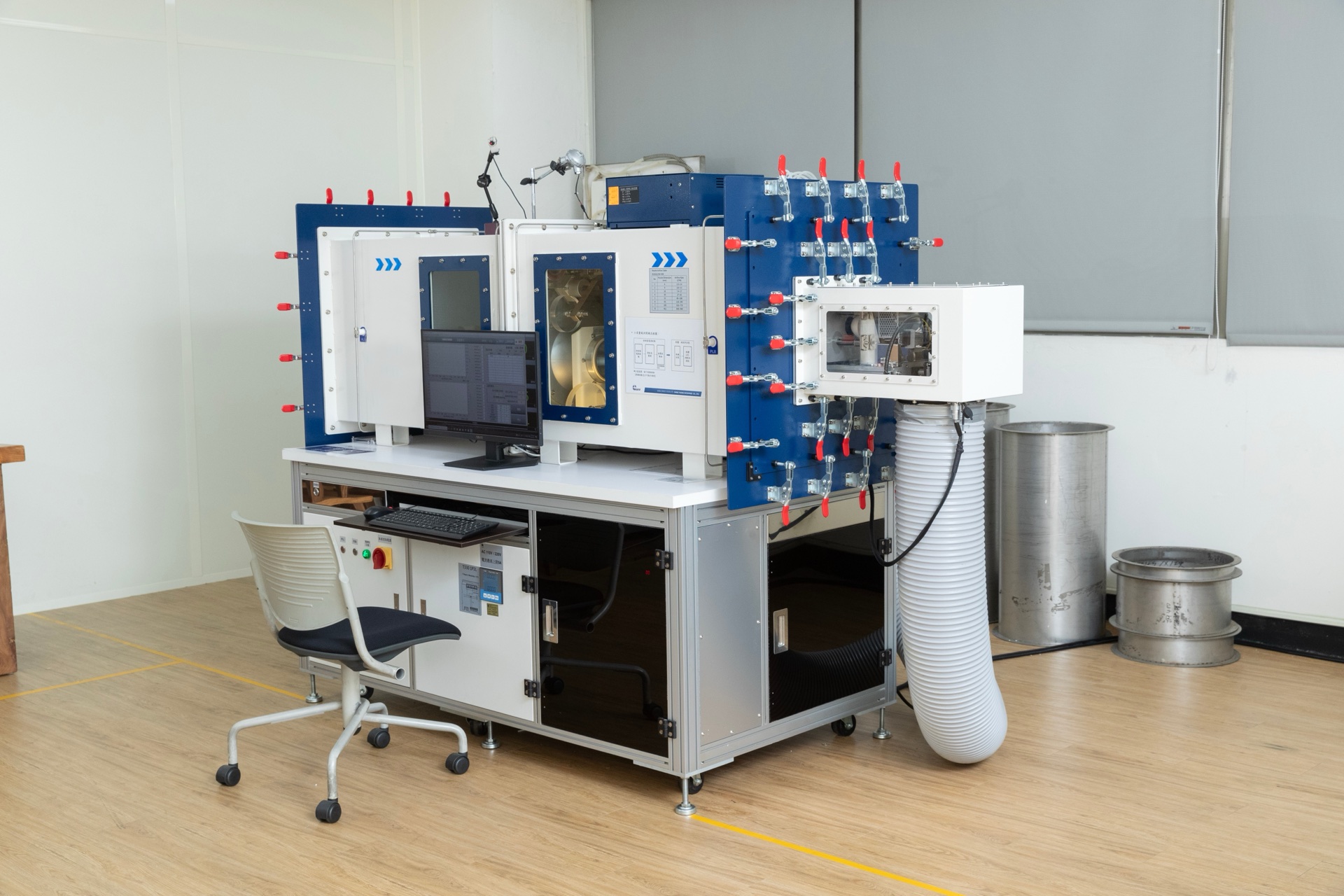
Ching Yuang’s laboratory has two wind tunnel systems. The first is designed primarily for compact precision cross-flow fans and supports test airflow up to 900 CFM (25 CMM). Cross-flow fans are commonly used in air-conditioning equipment, air-circulation products, electronics cooling, and internal ventilation assemblies. Because dimensions and flow-path configurations vary, sample size, inlet and outlet geometry, and mounting requirements should be reviewed before testing.
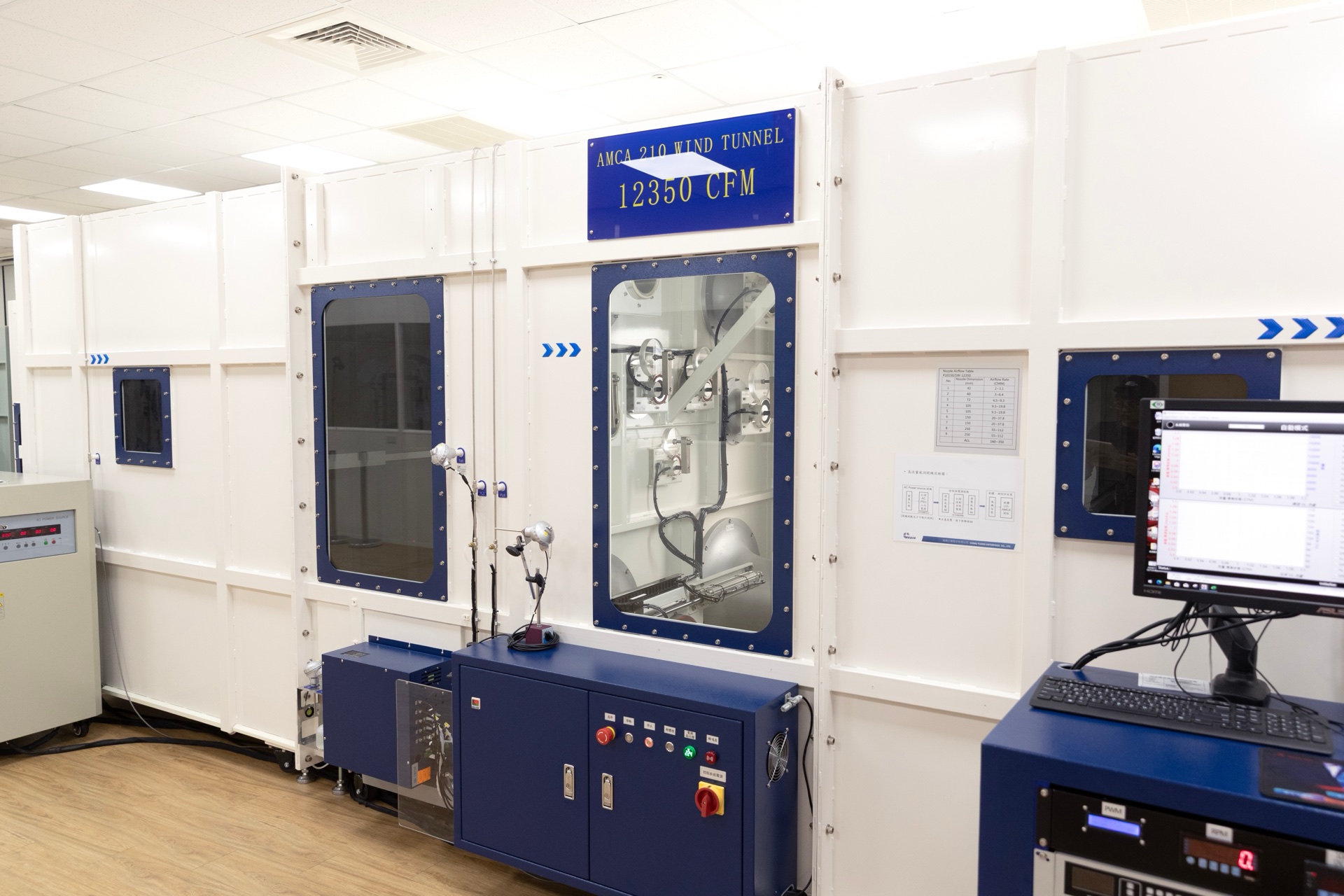
The second system can accommodate selected axial-flow fans, multi-blade fans, and exhaust fans, with test airflow up to 12,350 CFM (350 CMM). Actual eligibility depends on fan dimensions, required fixtures, test configuration, equipment capacity, and the requested method.
Evaluating Test Methods Under AMCA 210, ISO 5801, and CNS 7778
Fan testing requires a clearly defined configuration, set of measurements, operating conditions, and data-reduction method. Based on the customer’s objective and the laboratory’s accredited scope, Ching Yuang can evaluate the applicability of methods associated with ANSI/AMCA 210, ISO 5801, and CNS 7778.
Not every fan can be tested under the same setup. The applicable method and configuration depend on the product type, dimensions, installation boundary, required test points, and intended use of the report. Before accepting a project, the laboratory reviews the technical information and confirms the proposed setup, mounting requirements, measurements, and reporting format.
If the report is intended for regulatory documentation, a public tender, procurement approval, or third-party review, customers should disclose those requirements during the quotation stage. This allows the laboratory to confirm whether the requested method and report format are covered by its current accredited scope.
Turning Manufacturing Experience Into Measured Data
For product engineers, wind tunnel testing can help compare changes in impeller geometry, motor selection, housing design, and airflow paths. For buyers and equipment users, measured performance data supports a more informed comparison than catalog ratings or subjective observations alone.
Ching Yuang has long been involved in fan manufacturing, application engineering, and performance improvement. The laboratory extends that experience into structured measurement and verification. In addition to commissioned performance testing, the technical team can discuss project-specific needs involving development analysis, performance investigation, and fan optimization.
Information to Provide Before Requesting a Test
- Fan type, model, and intended application
- Sample dimensions, weight, and inlet/outlet drawings
- Rated voltage, frequency, phase, power, and rotational speed
- Expected airflow, pressure, or operating range
- Requested standard or customer specification
- Purpose of the test and intended use of the report
- Sample quantity and preferred schedule
After receiving the information, the laboratory will evaluate equipment capacity, accredited scope, mounting requirements, and test conditions. If a custom fixture or transition section is required, it will be discussed before testing begins.
Frequently Asked Questions
Can every type of fan be tested?
Testing feasibility depends on fan type, size, airflow range, mounting arrangement, electrical requirements, and the requested method. Product drawings and electrical specifications should be submitted for an initial review.
Is a TAF-accredited test report the same as product certification?
No. A test report presents results for a defined sample under stated conditions and methods. Product certification, regulatory compliance, and procurement acceptance remain subject to the applicable authority, certification body, or purchasing organization.
How can a company request an evaluation and quotation?
Provide the fan model, dimensions, rated electrical data, target test range, requested standard, report purpose, quantity, and schedule. The laboratory will review the information and confirm the test items that can be performed.
Looking for a Fan Testing Laboratory in Taiwan?
Send Ching Yuang your product information and testing requirements for an initial technical review.
Testing capabilities, accredited items, report statements, and use of accreditation marks are subject to the laboratory’s current TAF-accredited scope and the formal review of each project.


